
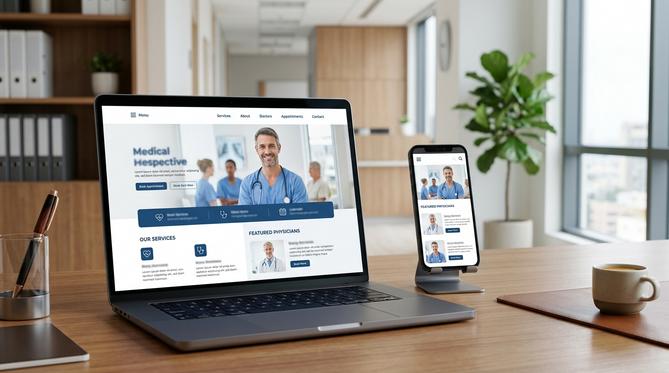
As a medical, dental, or aesthetic professional, you understand the importance of a first impression. Your clinic is designed to be welcoming and professional, putting patients at ease from the moment they walk in. Your website should do the same. While a visually appealing design is a great start, the real key to a successful online presence is a superior medical website user experience (UX).
Think of your website as your digital front door. If a potential patient arrives and finds it confusing, slow, or difficult to navigate, they will likely leave and look elsewhere. A frustrating online experience can create a negative perception of your practice before they ever speak to your team. It suggests a lack of attention to detail, which is the last thing you want associated with a medical provider.
What is User Experience in a Medical Context?
User experience goes far beyond colors and fonts. It’s the overall feeling a person gets when they interact with your website. Is it easy for them to find the information they need? Does the site load quickly on their phone? Can they book an appointment without getting frustrated? A positive UX means the answer to all these questions is a resounding yes.
In the medical field, this translates to building a digital environment that is clear, accessible, and reassuring. It’s about anticipating a patient’s needs. They might be anxious about a procedure or simply trying to find your office hours. Your website’s job is to provide those answers quickly and without any friction, making their journey to your care as smooth as possible.
Building Trust Before the First Appointment
Trust is the foundation of any patient-provider relationship, and that trust-building process starts online. A clunky, outdated, or broken website can inadvertently signal that your practice is not modern or organized. Patients may wonder if your clinical standards are as outdated as your website.
Conversely, a clean, professional, and easy-to-use site instantly builds credibility. It shows that you are patient-focused and invested in providing a quality experience at every touchpoint. Elements like clear service descriptions, professional team photos and bios, and easily accessible contact information all contribute to making a potential patient feel confident in choosing your practice.
Key Elements of a Strong Medical Website UX
Achieving a great user experience involves focusing on several core components. When evaluating your own site, consider how it performs in these critical areas:
- Intuitive Navigation: Your menu should be simple and logical. A potential patient should be able to find your list of services, doctor bios, location, and booking information within a few seconds. Avoid confusing labels or overly complex dropdowns.
- Mobile-First Design: The majority of your website visitors are likely using a smartphone. Your website must be fully responsive, meaning it looks and functions perfectly on any screen size. Text should be readable without pinching and zooming, and buttons should be easy to tap.
- Fast Page Load Speed: In a world of instant information, nobody waits for a slow website. If your pages take more than a few seconds to load, visitors will leave. Optimizing images and using efficient code is essential for keeping your site fast.
- Clear Calls-to-Action (CTAs): Tell your visitors what you want them to do next. Buttons like “Book a Consultation,” “Call Us Today,” or “Download Patient Forms” should be prominent, clear, and placed strategically throughout your site.
- Web Accessibility: Your website should be usable for everyone, including individuals with disabilities. This means using proper color contrast for readability, providing alternative text for images, and ensuring the site can be navigated with a keyboard.
How a Better UX Drives Patient Acquisition
Investing in your medical website user experience is not just about making a good impression; it directly impacts your practice’s growth. A straightforward online appointment booking system reduces the number of steps a person has to take, leading to more completed bookings and fewer abandoned attempts.
Furthermore, Google and other search engines prioritize websites that offer a great user experience. Factors like mobile-friendliness, page speed, and how long visitors stay on your site all influence your search engine ranking. A better UX can lead to higher visibility in search results, putting your practice in front of more potential patients who are actively looking for your services.
Your website is your most powerful marketing tool. By focusing on the user experience, you turn it from a simple online brochure into an effective patient acquisition machine. It’s about creating a clear path from online search to in-office appointment.
Ready to improve your medical website’s user experience and attract more patients? Contact the experts at InfoEmpire today to discuss your digital strategy. Call us at 877-482-4678 for a consultation.